A KAQM Reflection
Collapse is rarely caused by a single decision or a sudden loss of competence. More often, it unfolds as a pattern, one that repeats across political systems, medical institutions, and religious bodies alike, regardless of ideology or era. When feedback is treated as disruption, when correction threatens legitimacy, and when authority can no longer hear what it produces, systems begin to fail recursively. Each attempt to stabilize accelerates the very breakdown it is meant to prevent. What follows is not chaos, but repetition, the same errors cycling with increasing confidence. This is not coincidence, it is geometry.
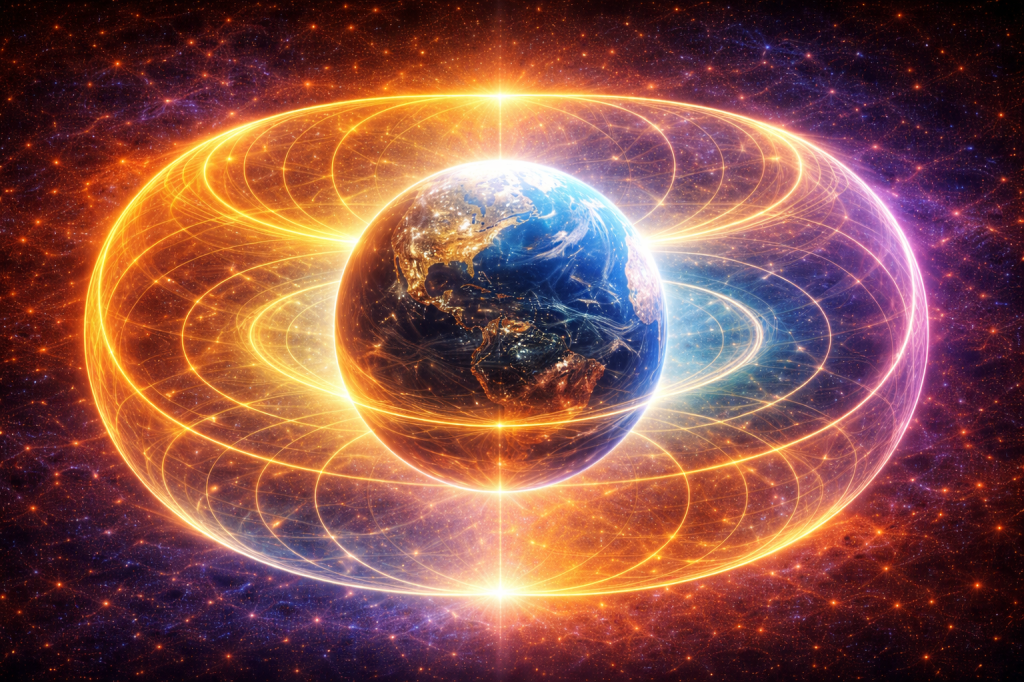
In the previous discussion of awareness as a circulating process, we explored how systems remain perceptive only when their outputs are allowed to return and reshape internal structure. The torus provides a useful way to visualize this. A healthy system maintains a continuous loop between center and periphery, between action and consequence. When this loop collapses, circulation continues internally, but the system loses contact with the conditions it once responded to. Institutional failure begins precisely at this point, not with malice or ignorance, but with interrupted return.
While this recursive failure appears across many institutional forms, it becomes most visible where feedback is both unavoidable and costly to ignore. Medicine occupies this position uniquely. It is tasked with responding to living systems, evolving evidence, and human bodies that do not behave linearly; yet it is governed by structures that demand certainty, hierarchy, and finality. When medical institutions lose the ability to integrate contradiction, the consequences are not abstract. They register in bodies, in outcomes, and in patterns of harm that repeat despite accumulating data. For this reason, medicine offers the clearest lens through which to examine how recursive failure hardens into institutional collapse, even as similar dynamics unfold elsewhere.
The same dynamics that make medicine a mirror for recursive failure also appear, in their own way, in political systems. Laws, regulations, and policies are meant to respond to societal feedback, yet the mechanisms that carry information back to decision-makers are often filtered, delayed, or reframed to protect legitimacy rather than guide correction. Just as medical hierarchies can silence dissenting evidence to maintain certainty, political hierarchies can reinterpret or ignore feedback to preserve authority. The result is familiar: cycles of error that repeat with increasing confidence, producing outcomes that surprise no one once patterns are recognized. Viewed through this structural lens, the geometry of institutional collapse becomes visible beyond any single domain.
Religious institutions, though different in form and function from medicine or politics, exhibit the same underlying pattern when feedback is constrained. Ritual, doctrine, and hierarchy can all serve as stabilizing frameworks, yet when questioning or contradiction is treated as threat, the system hardens. Interpretations of belief become insulated from lived experience, and guidance gives way to repetition. The same recursive failure that manifests in hospitals and government offices appears here as well, cycles of reinforcement that persist because the system cannot allow its own outputs to return as meaningful input. In this sense, religion is not exceptional. It is another expression of the same broken circulation.
Across medicine, politics, and religion, the consequences of recursive failure reveal themselves most clearly when systems treat feedback as danger rather than orientation. This is not a call for judgment, but a recognition of structure. The same forces that silence questions, filter information, or prioritize stability over accuracy produce predictable collapse. When circulation is interrupted, knowledge ceases to function as awareness and becomes defense.
Through the KAQM lens, institutional collapse is not a moral verdict but a geometric outcome. Systems that cannot sustain recursive return lose sensitivity to their own effects. They continue to operate, often with increasing confidence, while awareness drains away. The torus does not disappear, it inverts. Motion remains, but perception does not. Correction must then arrive from outside the system rather than from within it.
This post completes the outward application of the geometry introduced earlier. The same structural principles that allow minds and bodies to remain perceptive also govern collective systems. Where circulation is preserved, awareness persists. Where it is severed, failure becomes recursive.
The next step returns inward again, not to critique, but to capacity. If blindness emerges when return collapses, then sensitivity depends on something more fundamental than information alone. It depends on how systems register change, timing, and threshold before collapse occurs. That question leads directly into fields, consciousness, and time.
Ashley Benedict, Astrologer (KAQM)
 Fractal Astrology: KAQM Method